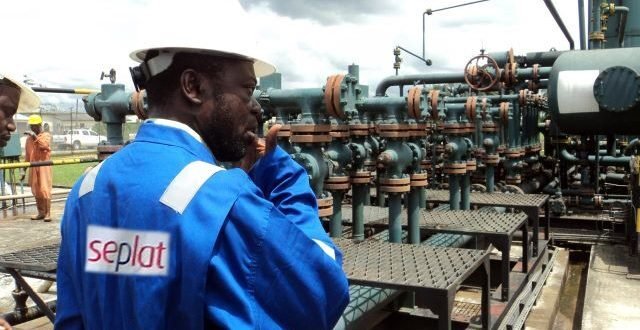
Seplat Energy Plc has unveiled an ambitious expansion programme that could significantly increase its contribution to Nigeria’s oil and gas production, with a target of 500,000 barrels per day (bpd) and a commitment to pay shareholders $1 billion in dividends over the next four to five years.
Chief Executive Officer and Executive Director of Seplat Energy, Engr. Effiong Okon, disclosed the plans at a fireside chat during Africa Oil Week (AOW) 2026 in Accra, Ghana.
Okon said the company’s growth strategy was designed to build on its experience operating in Nigeria while creating greater value for investors and supporting the country’s energy sector.
“Don’t get me wrong, it has never been a smooth ride. But the feat we have recorded has been monumental,” he said.
According to him, Seplat has moved from a company that borrowed $530 million during its formative years to one that has returned $835 million to shareholders through dividends.
“We have committed ourselves to deliver a billion U.S. dollars in terms of dividends over the next four or five years. And we’re well on track,” Okon said.
The announcement comes as African oil producers seek to attract fresh capital to reverse declining production, develop new reserves and strengthen domestic energy supply.
500,000bpd production ambition
Okon said Seplat was targeting substantial production growth through its joint venture operations, optimisation of existing assets and renewed exploration.
He said the company was focused on restoring asset integrity across its portfolio while undertaking fresh seismic data acquisition to identify new drilling opportunities.
“Our target is to grow production significantly,” he said, stressing that Seplat had the financial capacity and appetite to pursue expansion.
“We are really hungry,” Okon added.
The 500,000bpd target would place Seplat among the most significant independent oil producers in Africa if achieved, while potentially strengthening Nigeria’s position as a major crude oil producer.
Okon attributed the company’s expansion plans to disciplined capital allocation, corporate governance and a strong liquidity position.
Seplat’s strategy extends beyond crude oil, with gas expected to play a bigger role in its contribution to Nigeria’s domestic energy market.
Okon disclosed that the company’s shallow-water assets hold an estimated 12 trillion cubic feet (TCF) of gas reserves.
“We have a huge gas opportunity,” he said, adding that Seplat was working to accelerate the monetisation of the reserves through pipeline infrastructure.
The company’s gas expansion could support electricity generation, industrial activity and other energy-intensive businesses across Nigeria, where inadequate gas supply remains a major constraint on economic growth.
For the wider African market, the development comes as governments and energy companies seek to balance the need for reliable hydrocarbons with growing demand for cleaner and more affordable energy.
Seplat is also expanding its presence in the liquefied petroleum gas (LPG) market as part of efforts to improve access to cleaner cooking fuels.
Okon said the company wanted to contribute to reducing dependence on biomass and other traditional cooking fuels, which remain widely used in Nigeria and other African countries.
The LPG strategy is expected to support the broader transition towards cleaner household energy while helping to reduce carbon emissions and the health risks associated with indoor air pollution.
Seplat’s expansion strategy is being supported by its presence in both the Nigerian and international capital markets through its dual listing on the Nigerian Exchange Limited and London Stock Exchange.
The company’s market capitalisation stood at about $3.93 billion as of late August 2026, following strong appreciation in its share value over the past year.
Okon said the company’s record of returning more to investors than it initially borrowed demonstrated the strength of its business model.
“We have returned $835 million to our shareholders,” he said, highlighting the company’s focus on balancing investment in growth with shareholder returns.
With its planned production expansion, large gas reserves, LPG ambitions and $1 billion dividend commitment, Seplat is positioning itself for a larger role in Nigeria’s energy industry and the wider African energy market.
The company’s next phase of growth will therefore be closely watched as Africa seeks greater investment in oil, gas and energy infrastructure while confronting the twin challenges of energy security and the transition to cleaner fuels.