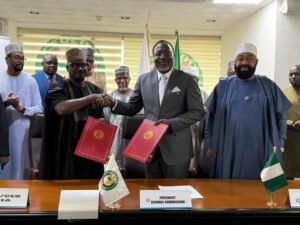
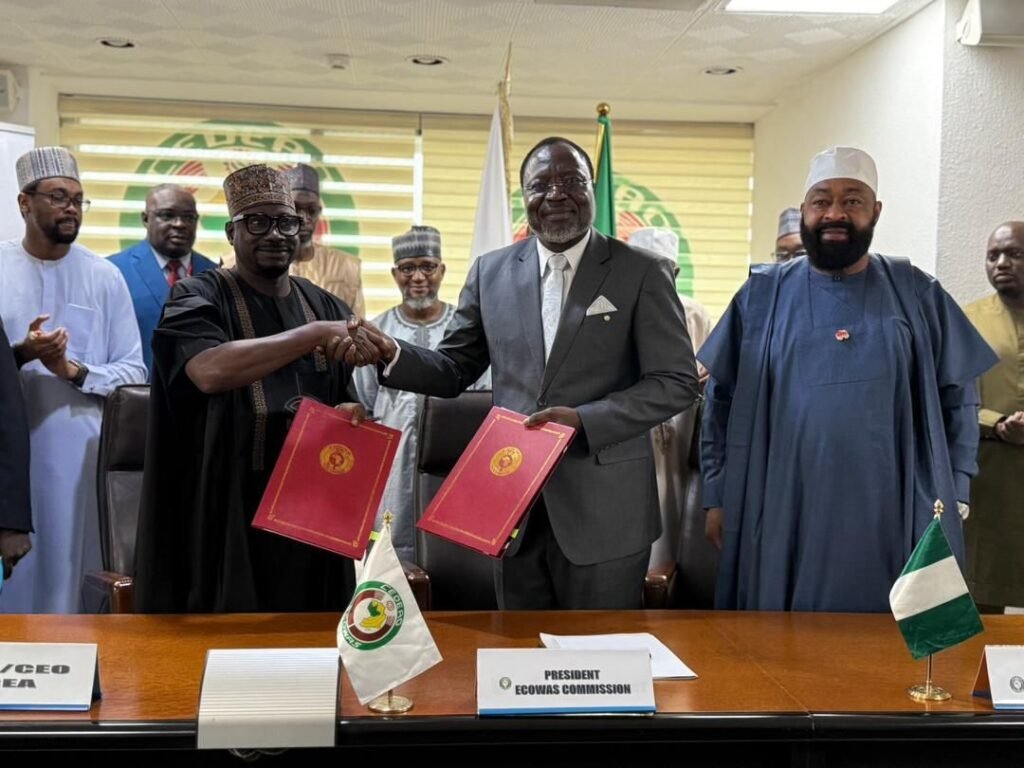
In a major step toward improving electricity access in public institutions, the Rural Electrification Agency (REA) has signed a Memorandum of Understanding (MoU) with the Economic Community of West African States (ECOWAS) Commission under the Regional Off-Grid Electricity Access Project (ROGEAP). The agreement, signed on February 23, 2026, provides grant funding support from ECOWAS for the electrification of 15 public health and education facilities in Nigeria using solar photovoltaic (PV) systems.
Following the signing of the REA-ECOWAS MoU, REA also entered into a separate agreement with the Niger State Government to facilitate state-level collaboration and co-financing for selected project sites within the state.
The ECOWAS partnership marks the formal commencement of Nigeria’s pilot implementation phase under ROGEAP which is a regional initiative supported by the World Bank to expand off-grid electricity access across West Africa and the Sahel.
Under the agreement, ECOWAS will provide a grant of $700,000 to support the installation of solar PV systems in rural health centres and schools located in the FCT, Niger State, and Nasarawa State. The project will be implemented by REA as the technical and financial implementing agency.
Speaking at the signing ceremony, the Managing Director/CEO of REA, Dr. Abba Abubakar Aliyu, described the agreement as a strong demonstration of regional collaboration driving national development.
“This partnership with ECOWAS reinforces Nigeria’s commitment to expanding reliable electricity access to critical public institutions. Electrifying health centres and schools means improving healthcare delivery, enhancing learning conditions, and strengthening community development.”
Reflecting on the regional significance of the project, His Excellency, President of the ECOWAS Commission, Dr. Omar Alieu Touray, stated: “This pilot phase in Nigeria is a cornerstone of our regional strategy to eliminate energy poverty. By providing sustainable solar solutions to schools and clinics, we are not just lighting up buildings; we are powering the future of West Africa. This collaboration with the REA demonstrates how regional grants can be effectively localized to touch the lives of the most vulnerable citizens.”
To ensure effective implementation, a dedicated Project Implementation Unit (PIU) will be established within REA, working closely with the ROGEAP Project Implementation Unit and an established Steering Committee.
In alignment with the ECOWAS agreement, REA also signed an MoU with the Niger State Government to enable access to ECOWAS funding and provide counterpart support for project sites within the state. The Niger State Government will collaborate with REA on coordination, co-financing, and monitoring of installations in selected facilities.
Expressing his support for the subnational partnership, the Governor of Niger State, Hon. Mohammed Umar Bago, stated: “Our partnership with the REA is a testament to our administration’s ‘New Niger’ agenda, which prioritizes sustainable infrastructure. By implementing these solar projects, Niger State is ensuring that our rural health and educational facilities have the reliable power they need to serve our people effectively. We remain committed to providing the necessary counterpart support to make this initiative a lasting success.”
This dual-level partnership structure with ECOWAS and subnational cooperation with Niger State strengthens institutional coordination and ensures efficient delivery of the pilot project.
The project is expected to improve energy reliability in rural public facilities, reduce dependence on diesel generators, lower operating costs, and promote clean energy adoption in line with Nigeria’s national energy policies.
Through this collaboration, REA continues to advance its mandate of electrifying unserved and underserved communities while leveraging regional partnerships to unlock sustainable financing and scale impact.